Showing posts with label The Simpsons. Show all posts

Wednesday, May 6, 2015

Chernobyl and Pripyat


My daughter Vienna and I have a joke about Homer Simpson arguing with Jean-Luc Picard. In The Simpsons episode entitled "Lost Our Lisa," Homer convinces his daughter to break into a museum so they can see a special exhibit. They enter the building but stop at a velvet rope that intimidates Lisa. Homer takes a more adventuresome view: "You can't go this far and then not go farther!" In response, Captain Picard affirms the value of limits, especially when faced with a grave threat. Thus he replies in Star Trek: First Contact: "The line must be drawn here. This far, no farther!"


As far as I'm concerned, Homer wins the argument. Thus I went to Chernobyl. I mean, I was in Belarus. It was just a one hour flight to Kiev [Kyiv, around here] and a two hour bus ride to the Exclusion Zone. And my friends know, I am fascinated with relics and ruins. There was no way I'd miss this chance. I'd walk if I had to…


Of course, "one does not simply walk" into Chernobyl. It is a highly secure, undeniably dangerous place, that also happens to be quite beautiful in springtime. So I joined three other tourists - Yasushi Oizumi and Chihiro Kino, from Japan, and Olivier Wullen, from Belgium - and took a tour led by SoloEast. During the drive north from Ukraine's capital city, we learned about the disaster - and about the heroism of the "liquidators" who marched and flew into certain death to secure Reactor Number 4, sometimes by dropping armloads of sand, lead, and other absorbing materials into the burning core.


While scientists debate the possibilities, folks around here claim that an uncontrolled meltdown and subsequent follow-up explosion would have destroyed Kyiv and likely rendered Europe uninhabitable. Is this a fact? Did the world come this close to such a catastrophe? I haven't a clue. What I can confirm is that the radiation hazard is relative. Igor, our guide, demonstrated this fact by showing us a meter in downtown Kyiv: 0.15 micro-Sieverts, which is much lower than one encounters on an intercontinental flight. Weirdly enough, the level was also slightly lower when we passed the 30K checkpoint of the Exclusion Zone. But step near a hot spot and the levels exceed measurable amounts. All the more reason to visit Chernobyl with an experienced guide - and respect the signs.


Passing the guard-post required a display of our passports and careful scrutiny of our vehicle and tour-group paperwork. We then commenced to a rigid but fascinating itinerary of overgrown buildings, abandoned villages, crumbling Soviet propaganda ("Communism Lights the Future!" "Lenin is Always With Us!"]. In one room, early in our tour, I spotted a doll covered in dust. Igor downplayed the discovery: "You'll see lots of those."


Driving further into the Exclusion Zone, we passed an old woman named Rosalia Ivanovna who was walking the road from Chernobyl City to the village of Zales'ye, where she lives alone in a wooden house surrounded by pear and apple trees. Local authorities have begged her to accept a free flat outside the contaminated zone, but she insists on staying put. Normally she walks, but today she accepted a ride.


After we pulled off the weed-pocked road and begin tramping the winding path to her door, my memory drifted back to the Dark Walks of old English pleasure gardens, some of which were outfitted with freshly constructed ruins. Occasionally, their owners would install a real live "hermit" whose job was to offer benedictions of "Memento mori" to revelers wandering the pathways, and perhaps hoping for a little earthly romance in the cool of the evening. Igor reminded us that Rosalia doesn't often chat with strangers; he assured us that we were quite fortunate to meet her. And naturally we felt gratitude as she picked us tulips from her garden and presented a bag of bread for our day, reminding us (via translation) how Jesus fed the multitudes with a few loaves.


Suitably inspired, we picked our way closer and closer to the infamous reactor, detouring though to visit the "Russian Woodpecker," an early-warning radar system built to safeguard the Soviet Union against American nuclear missiles. The structure, formally the Дуга-1, earned its nickname from the chirping sounds it produced that could be picked up on televisions and radios all over the world.


Today the towering device is being devoured by forest, its control stations dripping and dank. I was therefore especially surprised when Igor announced, "We are not supposed to go inside. We will go inside." And so we did, making our ways down dark corridors, lit by the flashes of our cameras and phones.


Later in the afternoon we visited Reactor Number 5, crossing a rickety wooden bridge toward the interior of a vast cooling tower. We stared at the blue sky as birds wheeled lazy circles above us, and we clanged pieces of metal debris to produce creepy echoes of our presence. Following recent rains, the ground was moist and spongy, redolent with mushrooms, and a few sun-dried bones that seemed incongruous to this place.


We then drove next to an artificial canal where Igor pointed out monstrously (but naturally, he emphasized) huge catfish. How nice, I thought, that Rosalia had furnished us with a bagful of bread. The fish gobbled each slice without taking time to chew. Once more, the "loaves and fishes" story swam through my mind.


Finally we drove to a viewing stand next to the sarcophagus of Reactor Number 4, the plant whose explosion was caused, we are told, by a steam turbine test gone catastrophically awry. Yes, the radiation levels are somewhat higher here, but not excessively so - at least not for controlled visits. In fact, most of the truly dangerous stuff is found further north of this place, crossing over into Belarus. It was all a matter of prevailing wind patterns. We stood in silence, checking meters and photographing the rusting structure built to contain the damage.


An international array of countries and companies is erecting a new sarcophagus nearby, which will be rolled by rail and bolted over the existing container. The job was scheduled to be completed by now, and even when the new sarcophagus is fitted over the old, perhaps in a few years, no one expects it to last more than a century.


Because Chernobyl is, in its own way, still a working nuclear facility, undergoing a dismantling process that will take decades, this was one of the few places where our photography was closely monitored. Igor said we could take pictures of the reactor and the new container, and the monument, but nothing else. At least from this vantage point.


We concluded the day with a trip to Pripyat, a model town completed in 1970 as housing for Chernobyl workers and as a showcase for Soviet urban design. The city was developed to accommodate 50,000 people. This was a young town. The average age was 26, with about 1,000 children being born each year. Just prior to the disaster its people were buzzing with anticipation for the upcoming May Day celebration.


When the reactor exploded on April 26, 1986, few local people understood the significance of the event. And it took two days for officials to order that the city be abandoned. To reduce the risk of panic, evacuees were instructed to pack only documents and other essentials. No need to bring more than a 72 hours worth of supplies; they would, after all, return soon. Now Pripyat is called a ghost town, which is mostly true. There are some workers here, however, and a growing population of animal and plant life who have fitted themselves to the lethal environment.


Our group stayed at a tourist hotel outside the 10K Exclusion Zone and was reminded to obey the 10 p.m. curfew. Having heard of wolves that roam the area, the curfew seemed like more than a reasonable idea to me. The next day we returned to Pripyat for a more in-depth tour, which included a police station, a fire house, an experimental green house, and several schools. As Igor promised, we found lots of dolls, and in School Number 3, a pile of child-sized gas masks. I also found a booklet containing monthly dues stamps for a trade-unionist amid a pile of children's alphabet flash cards.


I held the artifact in my hand and wondered about its provenance. It might have been from someone who lived in Pripyat before the disaster, or it might be from a worker trucked in to decontaminate the city afterward. Either way, just a quick slip into the pocket, I thought, and I can bring it home. What a souvenir, from Chernobyl! With much reluctance, I laid it back upon the pile. Just walking through the places so quickly abandoned by people who thought they'd return in a few days makes me feel guilty. There's no way I would disturb this place any more than necessary.


Throughout the two-day trip, I frequently thought about the reasons why some wags dismiss this place as a "Radioactive Disneyland." One cannot doubt the pathos of this place, the reality of loss - even as one may hardly forgo the reality that every photograph taken by every tourist (mine included) have been well rehearsed.


But given the constant crunch of broken glass, Chernobyl is no theme park attraction. SoloEast recommends that visitors wear thick-soled boots, which is damned good advice. Because I wanted to limit the weight of my travel bag, I seriously considered bringing shoes better suited for a business meeting than for this decaying place. Only at the last minute did I realize the foolishness of my plan and dress for the environment. And sure enough, with every creaking floor and sagging roof, with every breaking shard of glass under my feet, and with every scrape against some protruding jab of rusting metal, I grew ever more grateful for those bulky, uncomfortable, heavy shoes. The song in my head all day? That silly Australian PSA jingle, Dumb Ways to Die.


We concluded our tour by climbing the steps of a 16-story building to get one last view of the region. We huffed and sweated our way to the roof and stared down at the city. A breeze blew and birds sang, and we could almost imagine the forest plodding its way toward the center of Pripyat, consuming the concrete and metal and moldering paper, transforming all that dead material into some new living thing. Clouds rolled overhead and the sun glowed silver. Then Igor announced one last stop before we descend the stairs: a special treat, he said, for the two Japanese tourists in our group. A dead dog on the 16th floor. He told me that some folks from Japan claim this to be the most meaningful and memorable part of their visit. Igor mused that one guy photographed the decaying animal for 45 minutes.


Yasushi and Chihiro, however, were not excited to photograph a dead dog. I snapped some images, but I soon wished I had not. If there is any moment that signifies why some critics refer to these trips as "Disaster Porn," this was it. Nonetheless I understood what Igor tried to do. He was evoking the Japanese concept of Mono no aware, an encounter with transience that is sad and wistful but also appreciative. It would be silly of me to ascribe my own reasons to visit Chernobyl to this concept. As I lack the linguistic flexibility to properly speak Japanese, I also lack the cultural nuance to fully contemplate Mono no aware. I was a Chernobyl tourist, no different from the thousands that have proceeded me.


So I bought cheesy souvenirs and took typical pictures. I then used Photoshop and HDR software to enhance the images, to convey some sense of my experiences here. With each step, and with every story I will tell about this place, I grow more and more removed from that final glimpse at the tower overlooking Pripyat. It becomes a series of self-contained moments, anecdotes, picturesque frames. Nonetheless, I can still hear those birds singing in the empty town, and I can remember the dance of dust particles as I swatted debris from my shoes and clothes.


And then it's time to leave. To depart the Exclusion Zone you pass through a minimum of two radiation detectors. The process is strangely perfunctory. You stand in an upright machine, your head resting against a gadget and your arms raised to either side. You place your hands into reading devices and wait for barely a second, wondering if the Russian word for "clean" will glow its faintly friendly affirmation. It does, but you're not sure if you can proceed, even as you feel the metal door unclick beside your waist. Later you learn that only a shrieking alarm will signal that you've carried some radioactive particle on your shoes. Otherwise you are clean. The machine says so. Still, you will always wonder.


One additional note: I took over 700 photographs in two days. This blog-post includes a small selection of them. Want to see a few more of my favorite images? Point your browser to my Facebook Album.

Sunday, April 19, 2015

Gomel Regional Lyceum


Earlier this week I returned to Gomel, invited by the regional lyceum to present two lectures: "American Dreaming: Facts and Myths about American Culture" and "The American Academy: Practices, Challenges, and Reflections from a U.S. Professor." This trip was inspired by
Antonina Petrakova who attended my Route 66 lecture at Gomel Central Library a few weeks before. Tonya coordinated with her colleague Svetlana Genadyevna to arrange this trip and, working with other faculty and an impressive array of students, overwhelmed me with friendship and hospitality.


Video by Aliona Kirnos

What do I mean by "overwhelmed"? I mean that after a quick visit with the principal and a whirlwind tour of the facilities, I was ushered into an auditorium packed with about 140 students and treated to a concert prepared solely for my visit. The show included a dance performance, poetry readings, and songs selected in large part to celebrate my home (including a stirring rendition of "California Dreaming"). At first I committed to memorizing the names of each performance, but after 40 minutes I had no chance of recalling them all - and I didn't want to slight any student; they were each so earnest and well prepared. So I simply began my remarks with the honest affirmation that I had never before been welcomed so warmly to a place.


I'd arrived with a gnarly cold and was hoping to crash pretty soon after my lecture, especially since the next day meant delivering that "American Academy" talk, which I still had yet to complete. But my desire for bed melted when I was treated to a leisurely conversation with tea and homemade treats. Then my hosts informed me that they'd arranged an informal tour of local street art, knowing my love of graffiti. At this point my head felt so stuffed that I felt like I was walking through a thick fog, but I genuinely appreciated Tonya and Svetlana's willingness to navigate us through a maze of apartment blocks to find some cool murals. Eventually a fellow joined us to point out a photography spot that we hadn't considered before, and I began to lose count of the folks who seemed determined to help me enjoy this lovely city.


For dinner my hosts recommended Staroye Vremya (transliteration of Старое Время, which means "Old Time"), a retro restaurant themed to evoke memories of Soviet-era food and ideology. I wish I had photographed (or, better yet, procured) one of the menus, which were filled with confident proclamations and paeans to the virtues of collectivist labor. But I didn't think too clearly about gathering souvenirs once Tonya and Svetlana ordered shots of vodka. I studied my хреновуха ("Hrenovuha": horseradish vodka for tough days) for a moment, marveling at someone's idea to top the glass with a sliver of pickle, and downed it in a single gulp. "Ahhh…" I was informed, "You drink like a Russian!" The meal, vodka, and conversation flowed thereafter, with me slowly forgetting my cold. Our third shot called for statements of love - after all, as Tonya taught me, "Бог любит троицу" (God loves a trinity).

An "авоська" - a string grocery bag that signifies
social "transparency" in Soviet times, hanging at "Old Time"
 
My hosts, I'm sure, had concluded that I'd consumed enough vodka to reap all the medicinal value it could offer. But by this point several new friends at a nearby table had heard my American accent and invited me over. That table was led by Stanislav, a friendly guy from Moscow who coaches a soccer team and bottles his own vodka. He poured a tall glass and passed it my way: time to really drink like a Russian! So we chatted and laughed and drank at least two more glasses before it was time to head out for the night. Stas and I shook hands and pledged the eternal friendship of our peoples, and somehow I found myself comfortably sleeping in Tonya's apartment [Note to Jenny: my host, always the epitome of grace and perfect hospitality, stayed with her mother that evening, leaving the flat to me and her kitty, Mysha - who actually claims the apartment as her own.]


The next morning featured a tour of a museum in the nearby village of Vetka, where we studied folk arts and religious icons. This time I traveled with Tonya, her colleague Alexander, and his daughter Darya, who I learned will soon be visiting San Francisco as part of the prestigious Minerva Program. Together we learned more about a village that had been home to Raskolniks, "Old Believers" who split from the Russian orthodox church over issues such as whether the sign of the cross should be delivered with two fingers or three - distinctions whose apparent peculiarity reflected broader debates about piety and power in 17th century Russian society. The fellow who led the tour spoke in Russian, while sharing his justifiable pride at publishing a large collection of scholarly articles on ethnography in journals published in the U.S. Tonya, Alexander, and Darya took turns translating for me, once more treating me as an esteemed guest (though I was more often a clueless outsider). I listened and learned as much as I could, all the while grateful that the previous night's celebrations had indeed helped clear up my cold. We also swung by an old house that's being refurbished, gaining entrance because, once more, they don't see many Americans here. Inside we found relics of the Soviet past lined up against the wall.


Back on campus I squeezed out about 15 minutes alone to run through my hastily scrawled notes and arrange my presentation on the U.S. educational system. As usual, I spoke as an American, a proud and enthusiastic representative of my country, but also as an individual free to share my personal views. Thus I dove into an analysis of the history and transformation of American higher education, speaking directly about contemporary problems of cost and access, and introducing folks to terms like "helicopter parent," ideals such as Berry College's "aspire to the top" slogan, and out-in-out oddities like Reed College's nude kickball league. The best part, however, was the freewheeling question and answer session that followed. When one student asked me why Americans don't generally care for "football" (which we term soccer), I spoke somewhat blandly about low scoring but then remembered a bit from The Simpsons in which Kent Brockman reports on the non-action of the game:
"Halfback passes to the Center. Back to the Wing. Back to the Center. Center holds it. Holds it. [rolling eyes] Holds it." 

In the next booth, the Channel Ocho reporter announces the same game using the same words, but delivers them with increasing passion that concludes with nearly orgasmic release. I poured my heart into the delivery of that bit but was nonetheless surprised when the audience erupted in applause.


One final memory from that presentation: A student noted that most contemporary popular culture is quite different from the music and artistry displayed during the previous day's concert, and then asked me whether I think that today's generation is regressing. Immediately I flashed back to the time when I delivered a humanities lecture on love poetry. In the section featuring one of the infamous invective pieces by Catullus, I was trying to find an example from some relatively recent music to provide an insightful parallel. My daughter recommended Nicki Minaj's "Stupid Hoe" [sic]. While I would hardly prefer Nicki Minaj to Catullus, I appreciate how today's generation isn't so far removed from those of the past. Sure, the manifestations are different, but some meanings are timeless. Anyway I was hoping to make some point about our common humanity when I found myself bursting out with my own rendition of Nicki's diss track, just like when I was presenting that "love poetry" lecture back in the U.S. And thus it came to pass that I stood there, 6,000 miles from home, adorned in a suit and tie, belting out "You a ho, you a stupid ho…" to an auditorium of Belarusian kids. Again, there was laughter and shared recognition, and a fruitful conversation. Some things, after all, can't be diss-cussed, they must be experienced! Following the lecture I enjoyed a few moments to talk with folks who seemed to really appreciate the presentation, and I felt all the more how lucky I am to be here. Before long, I was on a minivan heading west toward the setting sun and my temporary home of Minsk - hoping that I will one day return to Gomel. It's nice to have friends in Belarus!

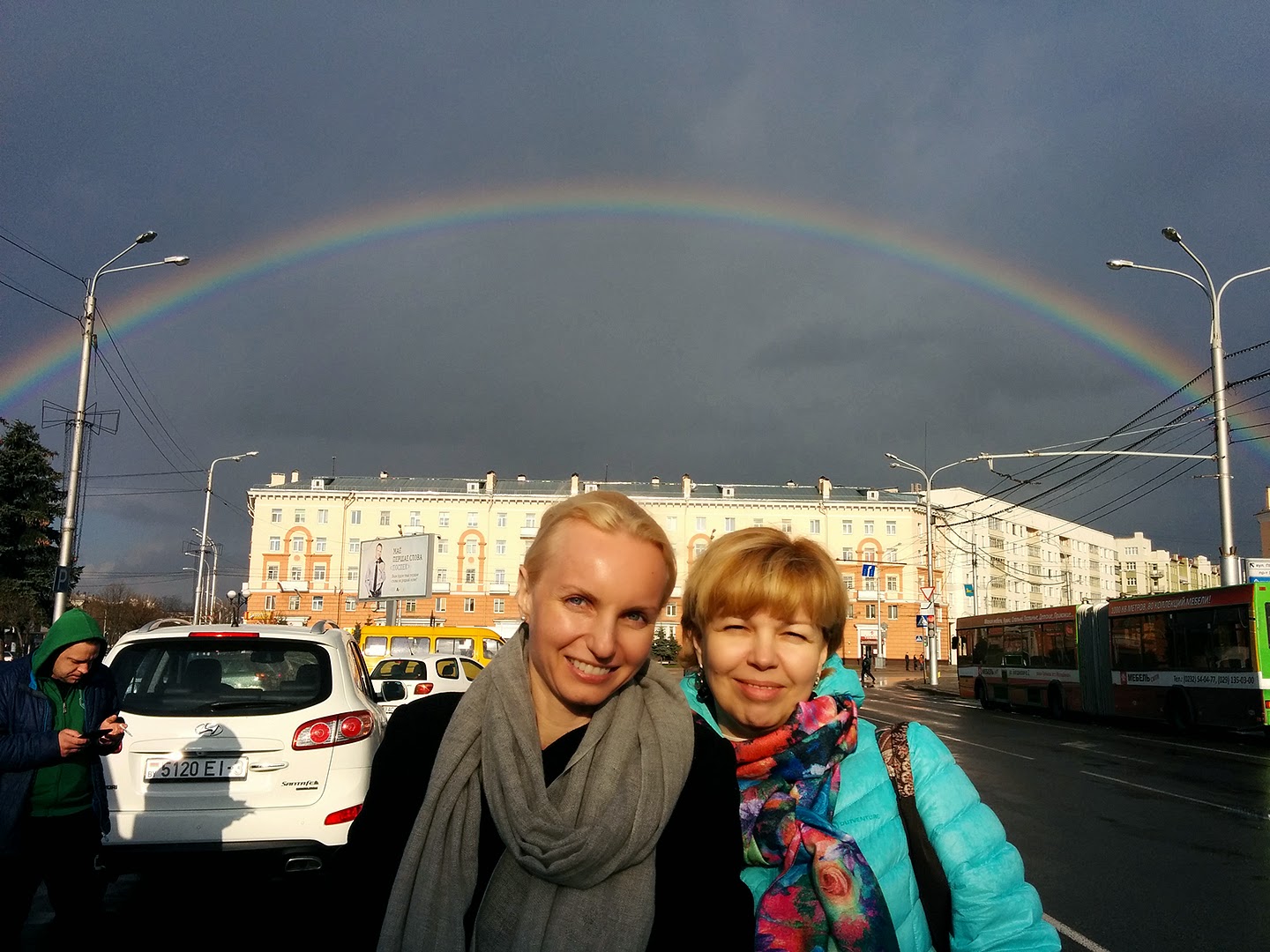
Antonina Petrakova and Svetlana Genadyevna

Thursday, February 26, 2015

Stop Doing Anything


You awaken just after midnight, feeling an electrical shock in your chest. You breathe, check your pulse, and wait. The street lights flicker through the blinds. You dream awhile. A few hours later you're up again, minutes before the alarm, wondering why you opted to teach at eight in the morning.

You remind yourself, "I've been here before," and you sort through notes. You think about every time you delivered this lecture, every time you elided important details, how you promised yourself you'd cover them better next time. You read emails that remind you how distant you've become, from writing, from friends, from family.

You take the metro, ankle it to your building, and chatter at the guard downstairs.

три, ноль, семь.

That's your room number: "307."

The old man asks questions you can't answer. Eventually he hands you a key. You welcome the class with that fixed smile, but your students figure it out quickly enough. Today is, well, it's hard to explain.

They have that look; you've seen it before.

"Is he going to pull this off?"

You do, barely.

They serenade with friendly "thank you's" as you hit the streets, remembering to return that key.

You stumble a bit, only hitting your stride as you slap a card against the scanner at the metro station. There will be no seats now, it's rush hour, but you don't care. You climb the stairs to your flat but keep walking past your floor. A bit dazed, you descend and work the lock. You'll hole up for the rest of the day.

You recall the wisdom of Homer Simpson.

"Note to self," he said. "Stop doing anything." 

Good advice. At least today.

Monday, February 9, 2015

The Imitation Game


Remember the Simpsons episode when Mr. Burns lost all his money and was forced to fend for himself for the first time? Though he couldn't quite figure out the difference between condiments ("Ketchup ... Catsup. Ketchup ... Catsup. Cats... K... K... uh... I'm in way over my head!"), he just had to exclaim to nearby strangers:

"I'm shopping!" 

Similarly, once Mr. Burns managed to understand the mysteries of mass transit, he announced his growing confidence to a new friend:

"I'm riding a bus!" 

That's me these days. Sometimes when I'm shopping, I'll hear some toddler shrieking about something, and I'll think to myself, "Yeah, but at least he can shriek in Russian." All I can do is point and hope that someone will take pity on me.

Well, no more.

First I found an app that provides real-time route-planning for buses and trams, so I can stop hiking so much and just get where I want to go (without being so metro-bound).

Better yet, I'm starting to recognize and pronounce names in Cyrillic.

It started last night when I was waiting for my pizza to arrive, and I noticed an interesting item on the menu: "тирамису."

"Lessee," I thought. "I can figure this out."

"т..." thank goodness, is just like "t" in the States.

"и…," I paused. The dreaded Reverse N. But I'd been working on that character earlier in the day, so I was able to figure it out. It sounds like "ee."

"Tee," I said to myself.

"р…" Uh huh. I won't get fooled by the Russian "р." That sounds like "r" in English.

"а…" Another easy one. Just like "a" in English. [Well, that depends on the syllable-stress, but... OK, stick with the basics.]

"м…" Yep, same as English.

There are five letters that are interchangeable between our languages, and I lucked out and got three of them in one word. "Tee-ra-m…"

I should be playing Wheel of Fortune!

OK...

"и…" A repeat. Another "ee." So "Tee-ra-mee…"

"с…" That's a tricky one, but I remembered that "c" sounds like "s" in English. Makes sense, I guess.

"у…" Just a matter of memory. In Russian, "y" sounds like "oo." So…

"Tee-ra-mee-su…

"Tiramisu!" I announced to the restaurant.

Thank goodness for cognates. Now if only I actually liked the stuff.

Outside looking in
Anyway, that was last night. Today, I went to Minsk's new Zamak shopping mall, practicing the bus system and double-checking the location of the nearby Expo building where I'll be presenting a talk next week. And I spotted a movie theater.

A few days ago, I went to another theater and discovered that you can't just "sound out" Cyrillic words as if they're English words. I stood there in front of the ticket-seller, flummoxed and embarrassed. The woman at the window pushed a list of movies in front of me and I pointed at one randomly.

That's how I ended up seeing an execrable bank robbery flick starring Hayden Christensen and Adrien Brody that had been dubbed into Russian (no subtitles, of course). Later that evening, IMDB revealed that I'd seen a 2014 direct-to-video-quality movie called American Heist.

Oh, and no, I don't recommend it, in any language.

Today, though, would be different. They're still playing The Imitation Game at the Zamak. I've seen it already, so I presume that I'll have a better chance of following the Russian version. But there was that poster...


... And that name:

"ИГРА В ИМИТАЦИЮ"

Once again, I heard Burns' voice: "I'm in way over my head!"

So I snapped a pic and moved off to a corner, sounding out the letters and feeling like a child.

Little by little I figured it out.

It didn't take long for "ИГРА" to become "egra." That word means nothing to me. Still, I had hope. If only…

"Lessee… ee-m-ee-ta-dz-ee-u…" Another cognate...

Imitation. The Imitation Game!

I mean, sure, I would presume that it'd be the same name, just translated from English to Russian. But The Imitation Game in English hardly sounds like "eg-ra ee-mee-tadz-ee-u" in Russian. Hell, it sounds better in Russian!

I slapped down 60,000 Belarusian Rubles (a little less that four bucks for an evening show) and smiled.

"eg-ra ee-mee-ta-dz-ee-u!"

Now I'm about to put on my warm clothes and catch the next bus heading northwest on Pobediteley Avenue. And as God is my witness, I'm seeing a decent movie tonight!

Saturday, June 22, 2013

Guest Post: Istanbul (June 2 to June 13, 2013)

Jenny Wood wrote this guest post, sharing her memories and perceptions of our summer trip to Istanbul.


It's about time I share some of my memories of our first trip to Turkey! I'd never visited an Islamic country before, and I never imagined how much I'd love Istanbul. Our hotel was in the Sultanahmet District, a popular tourist region with small cobblestone roads, old and colorful buildings, and plenty of shops, restaurants, and important landmarks. Just a few blocks from our hotel (the Vezir) we could walk to Blue Mosque, the Hippodrome, and the Hagia Sophia (Ayasofya). All three are together in one large plaza that contains fountains and monuments.


Early on, we toured the Hagia Sophia, learning about its strange evolution. It started as a church, commissioned by Emperor Justinian I who envisioned something that could complete with Solomon's temple. A few centuries later it was converted into a mosque once the Ottomans took over. Fortunately instead of destroying the Christian symbols, the building's new owners covered them up, sometimes with plaster, sometimes with curtains. Now the Hagia Sophia is a museum that contains elements from both periods, bringing Christian and Muslim artifacts together in one place. There are mosaics of the Virgin Mary and Jesus next to the name of Allah written in Arabic. What a great combination of cultures! I love learning about things like this.


Once we got settled into Istanbul we took a side trip to Ephesus, the city from the New Testament, where Paul and John preached. It is all ruins now but is still pretty spectacular. We saw two amphitheaters and the facade of the library where the men would go to study. Supposedly there was a secret passage that connected the library to a nearby brothel. We also saw where their temple of Athena stood, along with a bathhouse and public restroom (again, for men only). It was all so interesting. Oh, and there were lots of cats there too. In fact, we saw cats pretty much everywhere we traveled in Turkey. Some are grungy and scared but others are sweet and happy to be pet. We couldn’t say no.


Back in Istanbul we wandered the narrow streets, always looking up. There are large mosques everywhere, adding a lot of beauty to the skyline. And there is so much history! The city was originally called Byzantium, and then Constantinople, and then Istanbul. You can still see ancient walls alongside new buildings. The architecture varies widely from place to place, but is all lovely and colorful. There are carpet, ceramic, and souvenir vendors everywhere, and lots restaurants with great food. I've had some delicious dishes since I've been here: kebabs, meatballs, hummus, and Sultan's Delight, a wonderful dish of mashed eggplant and cheese topped with grilled chicken and a yummy sauce.


Down by the river they sell a lot of fish. I tried some, but it wasn't very good; maybe I got the wrong kind or something. But, they have these boats where folks prepare the fish onboard, preparing sandwiches to sell ashore. Andy and I skipped those. Now I realize that I probably should have tried one. At least the grilled meat was tasty. One of our favorite meals was a meatball sandwich sold by a street vendor.


While we were there, we found ourselves caught up in protests sweeping the country. We first heard about the uproar about two days before we came, while we were attending the Salzburg seminar in Austria. We read that the Turkish prime minister wanted to bulldoze a park and build a shopping center in its place. Thousands of people responded by attempting a peaceful occupation. Police used tear gas to retake the park (followed by government apologies for excessive force) - and then police and protesters began preparations for what might happen next.


During our first night in Istanbul, we traveled to Taksim Square; that’s where we first felt the sting of tear gas. That evening, protesters were out in force, chanting, waving flags, and making a ruckus. The statue in the square was covered with banners, flags, and people climbing to take pictures or yell chants. A helicopter circled overhead, and every time it came close, people booed and shot birds at it. Some cars had been overturned; some had obviously been sat ablaze and later covered with graffiti. Amid all this chaos, we also saw vendors selling food and banners, and there were plenty of tourists taking pictures and watching the spectacle. Despite the exuberant atmosphere, we knew that another police incursion was possible at any moment.


When we returned a few nights later, the scene was quite different. The barricades were still up, as were the banners and flags, but it was more like a festival than a protest. There were groups of people singing and dancing, and more vendors had gathered to pitch their wares. More families had arrived, many with children. There even some hawkers selling and launching paper lanterns into the air. We stayed for a couple of hours, wandering around, and this time entered Gezi Park. The protestors had formed a big crowd under the trees, but we never felt endangered. Except for the stench of urine that permeated the place, I enjoyed our visit.


Our days weren’t entirely dedicated to watching the unfolding protest, though. We also checked out Istanbul’s grand bazaar and the spice bazaar. I really liked the spice bazaar and could have stayed there a lot longer (though that's dangerous; I wanted to buy everything). Unfortunately the grand bazaar was not as exciting as I had hoped. It was way too much like a mall, stuffed with brand clothing, leather, gold, and other things. There were some nice souvenir shops but they were harder to find.


Then, after seeing so many amazing pictures of the region, we decided to take a two-day excursion to Cappadocia. I’m so glad we did! We saw such beautiful countryside, with buttes jutting from ground, much like something you'd see in Southern Utah. Locals call the buttes “fairy chimneys,” and some had long ago decided to carve homes and churches inside of them. I loved the chance to climb inside. That was our first day in the region. The second day was even better. We suffered a super-early wakeup that morning, but it was worth it: Balloon Ride!


I've never been in a balloon before, and it was really amazing. Such a smooth ride and gorgeous view. I had the still camera and Andy had the video camera, so we created some great images together. There were a lot of balloons up there, too. You could tell that it's big business in this region. I can see why. It was my favorite part of the trip.


After the balloon ride we got an hour or so nap back at the hotel. Loved it! Then our tour guide took us on a hike through one of the valleys. I enjoy hiking, and this area was so beautiful. We saw more buttes and stopped at a couple of trailside “cafes,” conveniently placed at spots where tourists tend to get thirsty or peckish. The best part was the time we spent with the other people on the tour. There was a Pakistani couple that we got to know; he is a doctor and she used to work in education before deciding to stay home with a son who needs special care. And then there was Brian, a New Yorker who shares our love for The Simpsons and 30 Rock.


At the end of the hike, we stopped at a small town called Çavuşin. The most prominent feature of this small town was a large cliff-like butte with lots of rooms carved out of it. The guide said it was a church. Andy, Brian, Jahinder (the Pakistani gentleman) and I all climbed up this structure because, well, that's what we do! What fun to explore and climb, taking photos from different angles. After our climbing adventure, our group waited for Jahinder who always seemed to dawdle. Andy bought some fresh squeezed orange juice and we chatted. Then we spotted our new friend, sporting a red fez. Jahinder had found his perfect souvenir at the bottom of the church structure. We all chuckled, but he seemed genuinely thrilled with his new purchase.


After a great lunch, our group set about exploring an underground city. That was really interesting, too, learning how people once carved spaces to hide and store food from enemies. We were able to walk through four levels of rooms and tunnels. Apparently there are several of these cave cities in the region, and our guide took us to the largest one. We climbed down through tunnels into cool-temperature caves and learned a little more about how the people lived back then. I especially appreciated the group of little vendor stalls that led up to the entrance! We always enjoy a little shopping. Best of all, the venders weren’t attacking us with relentless sales pitches (one of our few irritations with Istanbul). The only downside: Each day of this trip included another one of those workshop “tours” where they try to get you to buy stuff. Thankfully we were able to talk our guide out of a third one.


After our trip to Cappadocia, we still had a few days to enjoy Istanbul. I loved getting to know our neighborhood and walking past the Sultanahmet Mosque and the Hagia Sophia. What a beautiful area! One evening we took a dinner cruise down the Bosphorus. For a dinner cruise it was pretty fun. The food was good but certainly not great. We ate while the ship was moored, but we hung out on deck once we got underway. The cool breeze and night-view were a major improvement over our seating below.


As with our dinner, the ship’s entertainment was a mixed bag. We loved the belly dancer, of course. We enjoyed the Turkish folk dancers too, though some were a little strange. The creepiest part involved these two guys who pulled their shirts over their heads, revealing big wobbly bellies painted to resemble faces. They performed a weirdly comical dance of a couple falling in love. It almost seemed like a satire of the folk dances that preceded them. After the entertainment, the performers invited the audience to join them on stage. Most folks preferred to sit and drink, but Andy and I danced. The best part was just seeing the buildings lit up along the river. Sure, dinner cruises can seem awkward, with a bunch of strangers crammed together on a boat, but it was worth all the strangeness to see Istanbul this way.


As our trip was winding down, Taksim Square was heating up once more. We were eating breakfast on the day before our departure when Andy noticed on television that police were clearing the Square with gas and water cannons again. That dreaded feeling of inevitability came over me. I could hardly be surprised when Andy announced that he had to get up there. Ugh. He said I could stay behind, but there was no way I was going to send him up there alone, with me waiting and wondering if he was safe. No way.


Once we made our way to the Square it was clear that things had changed. Most of the protestors had fled the square, squeezing into Gezi Park. The only people in Taksim were cops in black armor and other journalists, some official and some most definitely unofficial (like Andy). At first I didn't think we would be allowed inside the Square, but there were several people just walking around watching or snapping photos. Naturally Andy dove right in, which meant that I had to follow. The cops didn't seem to care; they were too busy worrying about a small group of protesters throwing rocks in our direction from behind barricades and overturned cars. The cops launched tear gas grenades, but the protesters wore gas masks too. They just picked up the grenades and threw them back.


Andy and I spent about an hour wandering around and trying not to get hurt. He focused on photography and I concentrated on what was happening around him. He got in a close shave when he went over to the large group of protesters. Andy wanted some photos, but once he got too close they started throwing rocks at him. An older man nearby told him that the protestors thought he was part of the Turkish media. Since many of the protesters were mad at the media, the man warned that Andy had better leave. Thereafter positioned himself between the cops and the protesters and got some great shots.


At one point, a gas canister misfired and emptied out right next to us. We all backed up while the park crowd cheered. Then things got stranger still. Another group of protesters, holding hands in a line, walked up through the group of cops. The cops were perplexed. The protesters encircled the police, but they were peaceful. That’s when I saw the water cannon, which for some unknown reason I didn't notice before at all. I knew something was going to happen and worried that Andy was going to get the camera soaked. [Yes, I was worried about the camera, not Andy. He could get a little wet, I figured, but that camera is expensive!] Anyway, it was only a few minutes before that cannon went off against the protesters. That’s when Andy took pictures of five protesters holding hands and kneeling on the ground before they got doused.


I watched from a distance, feeling safely detached from the view, until I felt the sharp sting of gas in my eyes, nose, and throat. My instincts kicked in and I bolted. I didn't breathe; I just ran with my hand over my eyes like a salute. I ran for about ten seconds and took a small breath to see if I’d gotten far enough away. The sting was still there so I kept pumping my legs. Finally I got to a spot where I couldn't feel the pain anymore. I had felt one small rock hit my leg and had a light bruise, but otherwise I was OK. I couldn't see Andy, but I knew he was right in the middle of the gas. I waited with an increasing sense of dread before I saw him running toward me with his shirt over his face. He’d gotten his photos and was ready to depart. "Unless you want to stay,” he added. I smiled sweetly. "No, I'm good. Idiot.”


Back at the hotel Andy began to edit photos and video. I opted to take pictures of nicer subjects than protestors and uprisings. Later we decided to head out to Miniaturk (though Andy kept wistfully looking up at the black smoke emanating from the square on the hill). Our goal was a park that contains dozens of miniature buildings and monuments from around Turkey. We got some directions from the hotel, but we were both really sketchy on them: take the metro to the bus station; then catch bus number something-or-other. That will take you there. OK, but how do I pay for the bus? And how do I know which stop it is?


We figured out the bus station (after about 15 or 20 minutes) and we learned where to purchase tickets. Once we found our ride, we tried to ask the driver if we’d selected the right route. He said yes but then couldn't or wouldn't answer any of our other questions. We rode for a while, not knowing at all where we were going or when to get off the bus. There was a young man who spoke some English, and he offered to help. Andy was wary but they guy assured us that we were on the right track. Turns out, Miniaturk has its own stop!


The sun was out and it was quite warm, but we had a fine afternoon. We saw miniatures of many of the things we'd seen that week: The Blue Mosque and the Hagia Sophia, Cappadocia, which had tiny balloons floating over it, Ephesus, and even Taksim Square. We walked around and took pictures for a couple of hours and got some ice cream. The heat was beating upon us, so I was really happy to find one of those tacky umbrella hats. It actually helped keep the sun off of me. We saw some things at Miniaturk that we wished we knew about earlier in the trip. Next time, we know to see any miniature parks first!


When we'd had our fill of miniatures, we headed back by bus to our neighborhood and planned on one last great meal at the restaurant that had become our favorite. I had Sultan's Delight again. Yum! Then as we ambled back through the Sultanahmet area, we passed a little outdoor cafe that we'd passed several times before. It was a place called the Dervish Cafe. We’d arrived at a perfect time because they actually had a whirling dervish performing! At first he was just standing next to a drummer and dulcimer player who made charming music together. We figured he would start doing his thing soon, so we decided to stop.


Soon the musicians changed to another song, and he started whirling. It was so beautiful. By this time I’d learned that a whirling dervish is actually a Sufi within the Mevlevi order. Apparently they espouse a love for God and a connection with other people. When they whirl, they hold their hands in a special position, with one hand pointing upward toward God and one pointing downward toward the earth. The whirling represents everything encircling the heart in peace and harmony. I watched as he whirled. The man’s eyes were closed, and he turned slowly and gracefully. To keep from falling, he kept one foot planted, allowing the other to rotate. He whirled for a few minutes and then stopped, rested a while, and then commenced to dance some more. We watched him whirl about three different times within a half hour. It was so relaxing and so beautiful. The whirling dervish reminded me of a hula dancer for some reason; he was so graceful. I could have watched him all night.


I was sad to leave Istanbul. I would miss our Sultanahmet neighborhood, the cats we would pet, the Blue Mosque and Hagia Sophia that would greet us every day, and the whole atmosphere and culture of the city. At least we had one last moment to celebrate as we rode to the airport in the wee hours of the morning. That’s when we heard one final call to prayer, a fitting send-off for our long flight back home.